Home / Insights / Marquee specification
LED Signs & Marquees · Specification guide
How to specify an LED marquee sign in Las Vegas, from pixel pitch to permit
A practical specification guide for owners, architects, lighting designers and general contractors: how to set pixel pitch, brightness, structure, power, controls, service access and permitting for a resort or casino marquee before it goes out to bid.
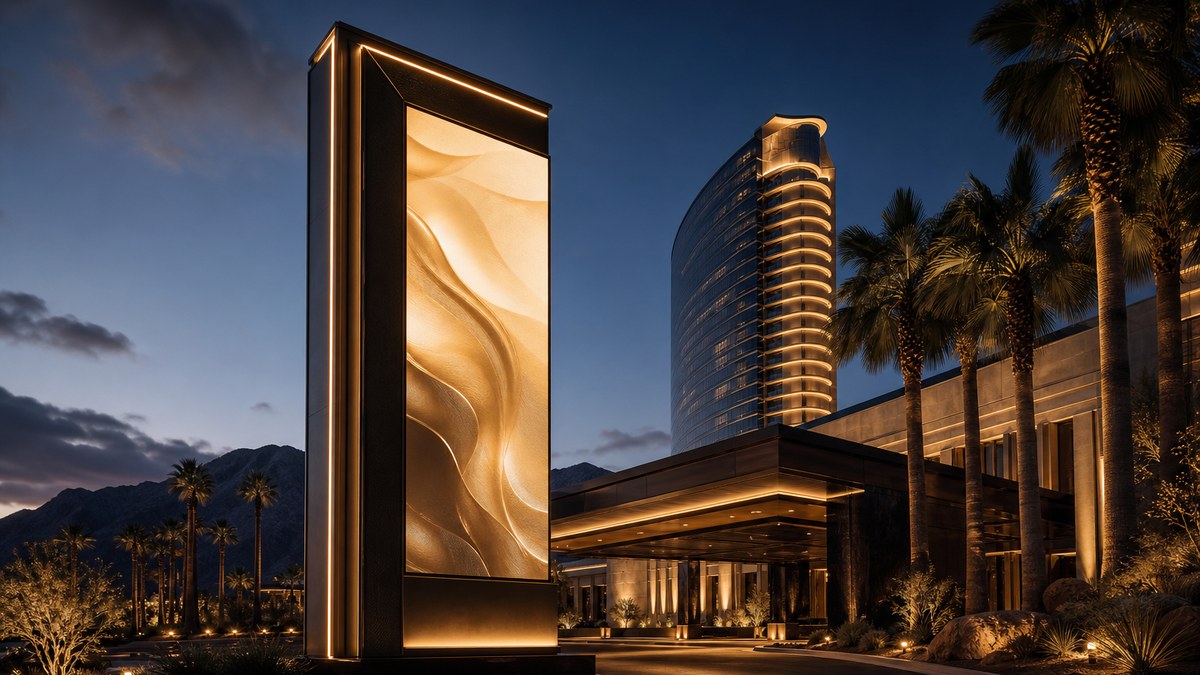
To specify an LED marquee sign in Las Vegas, start from how far away people will see it, then define pixel pitch, brightness and automatic dimming, the structure and wind design, power and data, the control and content system, service access, and the permits for the jurisdiction the property sits in. Get those seven decisions into the design documents early and the marquee can be bid apples to apples; leave them vague and every bidder will price a different sign.
Quick answer
A Las Vegas LED marquee specification should define: viewing distances and the resulting pixel pitch (a common rule of thumb is pitch in mm x 10 = approximate closest viewing distance in feet); daylight brightness with an ambient light sensor and night dimming; ingress, heat and UV ratings for desert duty; a structure engineered to the adopted building code and ASCE 7 wind provisions; dedicated sign circuits with a disconnect within sight of the sign (NEC 600.6); a listed sign assembly (NEC 600.3); a content and control system with redundancy; front or rear service access; spare modules; and permitting through Clark County or the relevant city, installed by a contractor licensed by the Nevada State Contractors Board in the right classification and monetary limit.
We are a Las Vegas team that coordinates design-assist, supply and licensed installation for large LED lighting, signage and display projects. This guide is written for the people who have to put a marquee into a set of documents: owners and their development teams, architects, lighting and signage designers, and the general contractors who carry the sign package into a bid. It does not include prices, because marquee costs depend entirely on scope. It does explain what drives scope, so your budget conversations start from the right questions. If you are earlier in the process, our overview of LED marquee signs and large-format signage is a good starting point.
Why a Las Vegas marquee is different from a sign anywhere else
Most commercial LED signs are products: a cabinet, a controller and a pole. A Las Vegas resort marquee is closer to a small building. It carries large faces at height, it has to read from a moving car several hundred feet away and from the sidewalk below, it runs every hour of every day, and it often anchors the property's brand on the most photographed street in the country.
The environment is harsh. Las Vegas reached 120°F on July 7, 2024, its hottest day on record, and summer afternoons regularly push cabinets, power supplies and LEDs to their limits. Sun on a south- or west-facing face is intense, dust is constant, and the cooler nights mean daily thermal cycling. The regulatory picture is specific too: most of the Strip is not inside the City of Las Vegas at all but in unincorporated Clark County, in the towns of Paradise and Winchester, and the Strip itself is a federally designated scenic byway whose status depends on its signs being well maintained.
That is why the specification matters so much. A vague line item like "full-color LED marquee, approximately 40 feet" invites bids that vary wildly in resolution, brightness, structure, controls and service model. A clear specification makes the bids comparable and protects the design intent all the way to first light.
Step 1: Define viewing distances before anything else
Every other decision flows from where the audience is. Before choosing a product, document three distances for each face of the marquee:
- Closest viewer: usually pedestrians on the sidewalk or guests at the porte-cochere.
- Typical viewer: drivers and passengers on the boulevard, often the primary audience for a Strip marquee.
- Farthest meaningful viewer: people across the boulevard, on pedestrian bridges, or on the approach from a freeway ramp or intersection.
Also note the approach directions. The 167-foot, three-sided marquee at Fontainebleau Las Vegas, for example, puts its two main displays facing north and south, toward the directions most traffic approaches from, with a slim vertical display between them. We did not work on that project; it is a useful public example of orientation driving the design. Multi-sided marquees multiply display area, structure and controls, so decide early how many faces truly earn their place.
Rule: write the viewing distances into the design narrative. They are the single most useful number a bidder can have, and the easiest to forget.
Step 2: Choose pixel pitch for the audience, not the spec sheet
Pixel pitch is the distance in millimeters between the centers of adjacent pixels. Smaller pitch means more pixels per square foot, a sharper image up close, and more LEDs, data and power to drive. Display manufacturer Planar describes a widely used rule of thumb: pixel pitch in millimeters multiplied by 10 gives the approximate viewing distance in feet at which the image looks smooth. A 10 mm pitch reads cleanly from roughly 100 feet; a 16 mm pitch from roughly 160 feet.
For a marquee, the right answer is often coarser than people expect. The boulevard audience is far away and moving, so the extra resolution of a fine pitch may never be seen, while it adds cost, weight, heat and power. On the other hand, a lower message band or a face that sits right above a pedestrian plaza may justify a finer pitch than the main display. It is common, and perfectly sensible, for one marquee to use different pitches on different faces or zones.
Resolution follows from size and pitch. Once you know the active display area and the pitch, you know the pixel count, and that tells your content team what canvas they are designing for. Put the required minimum resolution for each face in the specification so content can be produced before the sign is built.
| Marquee zone | Typical audience | Pitch approach | Notes |
|---|---|---|---|
| Main boulevard faces | Drivers and passengers at distance | Coarser pitch sized to the typical viewer | Highest brightness demand; largest area |
| Message or reader band | Pedestrians and arrivals | Finer pitch for legible text | Often the most-read part of the sign |
| Vertical or accent displays | Mixed distances | Matched to content, not to the main faces | Watch color matching between products |
| Architectural outline and accent lighting | Everyone, day and night | Linear or pixel products, not video | Ties the marquee to the facade |
Step 3: Specify brightness, dimming and color for desert sun
Outdoor LED displays are rated in nits, a measure of luminance. A marquee that looks spectacular at night can wash out completely at 3 p.m. in July if it is underspecified. When downtown's Fremont Street Experience canopy was upgraded in 2019, it was specified at up to 5,000 nits so shows could run before dark. Industry guidance for screens in direct sun commonly targets roughly 5,000 to 7,000 nits depending on orientation, with south- and west-facing faces at the top of that range.
Brightness is only half the story. At night, full daylight output is far too bright: it glares at drivers, washes out content, wastes energy and draws complaints. Every marquee specification should require an ambient light sensor with automatic brightness control, plus scheduled limits for night hours, and the ability for the operator to set and lock those limits. Ask for the dimming curve and the minimum stable brightness, because cheap systems lose gray-scale detail and color accuracy at low output.
Also specify:
- Viewing angle horizontally and vertically, so the image holds color and brightness for viewers below and to the side.
- Color uniformity and calibration across modules and cabinets, including how replacement modules will be matched years from now.
- Gray-scale and refresh rate high enough to look smooth to the eye and on phone cameras, which matters on a street where every guest is filming.
- Contrast, including mask and louver design, so black reads as black in daylight.
Step 4: Design for heat, dust and UV
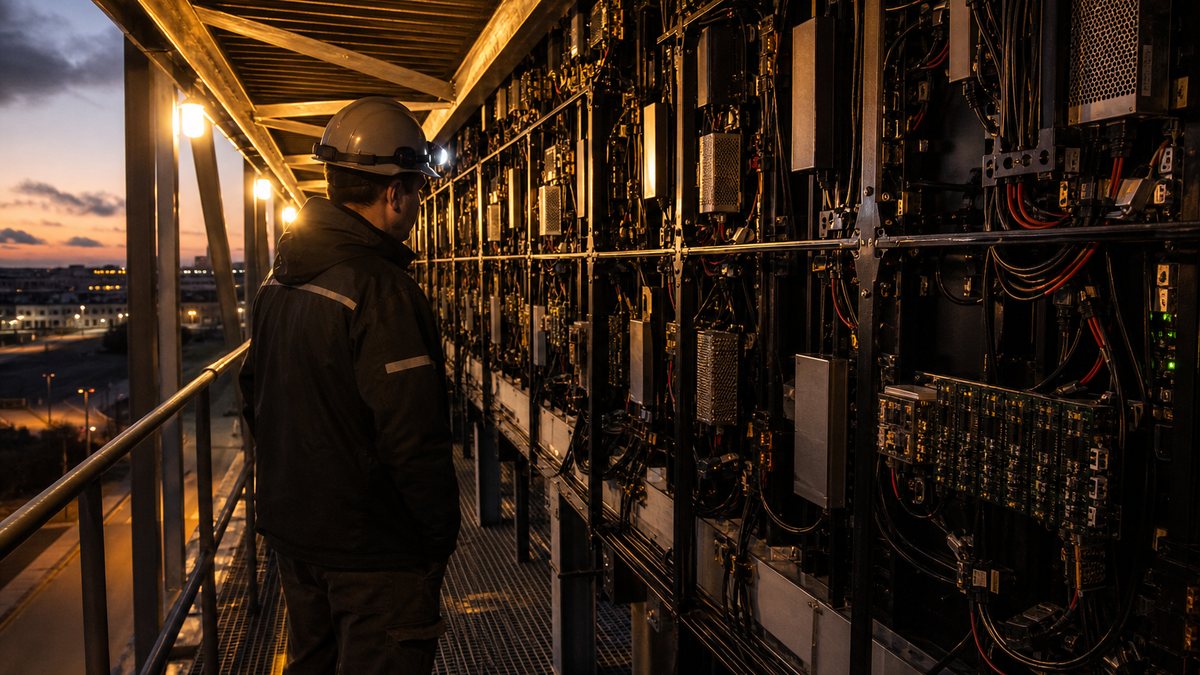
Desert duty should be written into the specification, not assumed. Require an ingress protection rating suitable for the exposure (IP65 or better is a common requirement for the weather-facing side of outdoor cabinets), an operating temperature range that covers summer peaks with margin, and UV-stable materials for masks, gaskets and finishes. Ask how each cabinet manages heat: passive designs with good thermal paths, filtered fans, or air-conditioned cabinets each have different service implications.
Power supplies and receiving cards are where heat usually shows up first. Ask bidders to state component ratings at the expected internal cabinet temperature, not at a laboratory 25°C, and to show how the design keeps electronics within those ratings on the hottest afternoons. Ask, too, for the expected brightness decay over the life of the display, because a sign that starts at full daylight brightness may not stay there.
Rule: in Las Vegas, thermal design is reliability. A marquee that runs cool runs longer, holds its color and needs fewer night calls.
Step 5: Engineer the structure, wind and foundations
A tall marquee is a structure first. Its foundations, columns, cabinet frame and connections must be designed by a licensed engineer to the building code adopted by the jurisdiction, including wind loads under ASCE 7. Sign-specific wind provisions were first adopted in ASCE 7-05 and carried into later editions, and the sign industry has funded research into how they apply to commercial sign structures. Expect the permit set to include sealed structural drawings and calculations.
Points to settle in design development:
- Who engineers what: the building's structural engineer, the sign manufacturer's engineer, or a delegated design. Write the division of responsibility into the documents.
- Weight and wind area of each display option, so the structure is not designed around one product and bid with another.
- Foundations and underground utilities, which drive civil coordination and schedule on new sites.
- Attachment to buildings, where a marquee or blade sign mounts to a tower or podium and loads transfer into the building frame.
- Clearances over driveways, sidewalks and fire lanes.
When a marquee is part of a new building, bring it into the structural design early. Our guide to facade lighting and new-construction LED packages explains how lighting, signage and display scopes fit into a new-build schedule.
Step 6: Plan power, data and electrical code compliance
Power and data are where late marquee changes get expensive. The National Electrical Code's Article 600 covers electric signs and outline lighting, and several of its requirements belong in the specification:
- Listing (NEC 600.3): electric signs must be listed and installed according to their listing instructions. Specify a listed sign assembly and listed components.
- Branch circuits (NEC 600.5): sign circuits are treated as continuous loads in load calculations, so size feeders and circuits accordingly.
- Disconnects (NEC 600.6): each sign circuit needs a disconnect within sight of the sign, generally visible and not more than 50 feet away, or a lockable disconnect where that is not possible. Externally controlled signs have additional disconnect requirements.
- Grounding and bonding (NEC 600.7): metal parts bonded to the equipment grounding conductor of the supply circuit.
Beyond code minimums, specify surge protection at the service and the sign, power-quality expectations, and how the sign behaves after an outage. For data, require redundant data paths from the controller to the display so a single cable or card failure does not take down a whole face, and specify the fiber or network route back to the control room. Coordinate it all with the electrical engineer of record so the panels, conduits and pathways appear on the electrical drawings, not just the sign shop drawings.
Writing a marquee into your documents?
We help owners, architects and general contractors define marquee scope, compare display options and prepare bid-ready specifications, then deliver through licensed, insured contracting partners. Every proposal names the licensed contractor performing the work.
Step 7: Specify controls, content and integration
A marquee without a content plan is an expensive black rectangle. Decide who will create content, how it is scheduled, who can push an urgent message, and how the marquee relates to the rest of the property's exterior lighting. Downtown's Circa sign, manufactured by YESCO, is a public example of integration: its programmable RGB LEDs connect to the resort's lighting control system, so the sign can be part of coordinated exterior scenes. We did not work on that project either; it simply shows what integration makes possible.
In the specification, cover:
- Content management system and its users, permissions, scheduling and remote access.
- Redundant playback with automatic failover, so a single player failure does not darken the marquee.
- Monitoring of temperature, power, data and module status, with alerts to the operator.
- Integration with the facade and site lighting control system, and with property systems such as event schedules.
- Cybersecurity on any networked controller, coordinated with the property's IT team.
- Advertising use, if third-party content may ever run, because that affects contracts, content systems and approvals.
Content is also a design discipline. Ask the content team to design to the actual resolution of each face and test it on a mock-up or sample cabinet in daylight and at night.
Step 8: Design service access for the life of the sign
Every module, power supply and receiving card on a marquee will need attention at some point. The specification should state whether the display is front-serviceable, rear-serviceable or both, and how technicians will physically reach each zone: internal catwalks, rear access doors, davits and tie-off points, or lifts from the ground. Front-serviceable designs can be thinner and suit building-mounted signs; rear service with an internal walkway is often preferred on large freestanding marquees because work can happen without blocking the street.
Ask for attic stock: spare modules, power supplies and receiving cards from the same production batch, stored on site, so a failure can be fixed overnight with matching color. On a property that never closes, repairs happen in early-morning windows, the same way the Fremont Street canopy was upgraded section by section while the attraction stayed open. If you already own a marquee whose parts are getting hard to find, our team sources replacement LED modules and parts for existing displays.
Step 9: Map the permits and approvals
Permitting depends on where the property is, which is less obvious in Las Vegas than it sounds. Most of the Strip lies in unincorporated Clark County, while Downtown and Fremont Street are in the City of Las Vegas, and Henderson and North Las Vegas are separate cities. Each has its own development code and sign rules, and the jurisdiction decides what reviews apply.
For a typical large marquee, expect some combination of:
- Land-use or zoning review of size, height, location, animation and illumination under the jurisdiction's development code (in unincorporated Clark County, Title 30).
- Building permit with sealed structural drawings and calculations.
- Electrical permit for the sign circuits and service, with listed equipment.
- Coordination with any right-of-way, traffic or utility requirements near the road.
The installing contractor must hold a license from the Nevada State Contractors Board in the right classification. Nevada's classifications include C-2 for electrical work and C-6 for signs, and every bid must fall within the licensee's monetary limit. Confirm the license, classification and limit before award. Permit timelines vary with the project and the jurisdiction's workload, so put permitting on the project schedule from the start rather than treating it as a formality at the end.
Step 10: Schedule for manufacturing, installation and commissioning
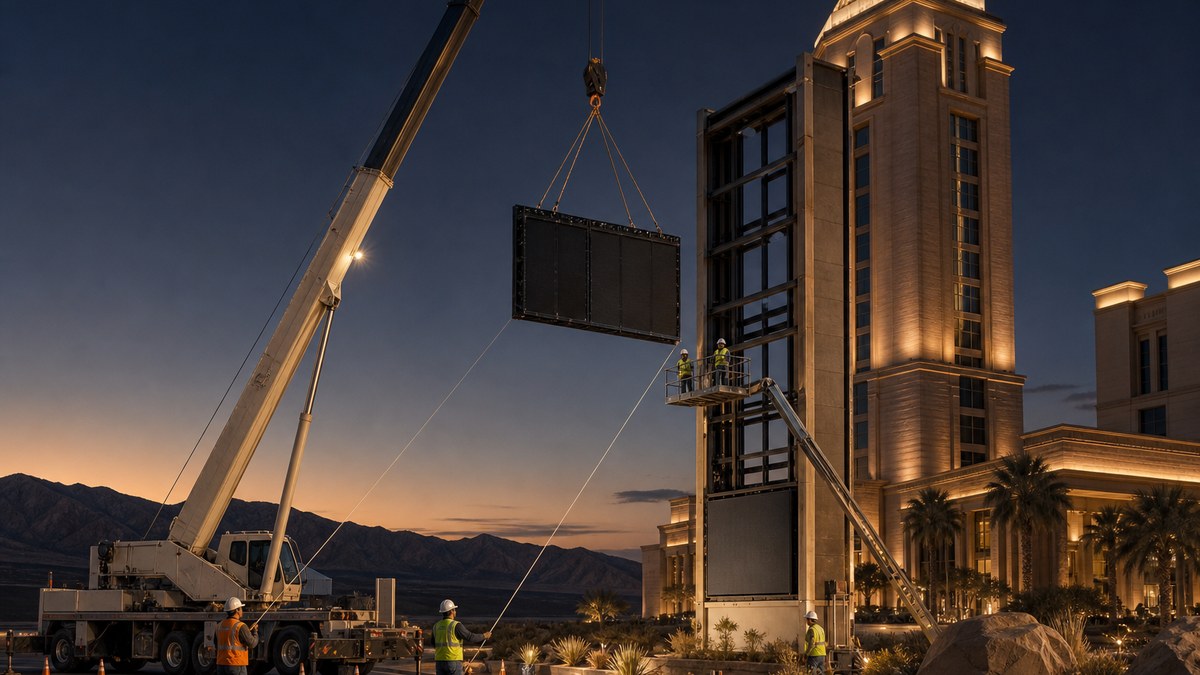
A marquee schedule has more steps than most owners expect: design and engineering, submittals and approvals, permits, foundation and structure, display manufacturing, shipping, installation, electrical connection, programming, calibration and commissioning. Display manufacturing and the structure often run in parallel, so the structural design needs final display weights and dimensions early.
Installation itself can be quick once everything arrives: the Circa sign's fabrication reportedly took about four weeks and its installation about three days. The long poles are usually design decisions, approvals and the structure, not the hours on site. Build commissioning into the schedule too: calibration, content testing in daylight and at night, operator training, and handover of drawings, warranties, spare parts and passwords.
A marquee specification checklist
Use this as a starting outline for the sign section of your documents, or as a review list when a design-build proposal arrives.
| Item | What to specify | Why it matters |
|---|---|---|
| Viewing distances | Closest, typical and farthest, per face | Sets pitch, size and brightness |
| Pixel pitch and resolution | Pitch per face or zone; minimum resolution | Makes bids comparable; lets content start early |
| Brightness and dimming | Daylight nits, ambient sensor, night limits | Readable by day, comfortable by night |
| Environmental | Ingress rating, temperature range, UV materials | Reliability in desert conditions |
| Structure | Engineer of record, ASCE 7 wind, foundations | Safety and permit approval |
| Electrical | Listed assembly, circuits, disconnects, surge | NEC Article 600 compliance |
| Controls and content | CMS, redundancy, monitoring, integration | Uptime and coordinated exterior shows |
| Service | Front or rear access, walkways, attic stock | Fast repairs without closing the street |
| Permits and licensing | Jurisdiction, approvals, NSCB license and limit | No surprises at award or inspection |
| Schedule and handover | Lead times, commissioning, training, documents | A marquee that works on opening night |
Common marquee specification mistakes
- Specifying a product instead of a performance. Naming one manufacturer's model without performance criteria limits competition and makes substitutions hard to evaluate. Specify performance, then list acceptable products.
- Choosing pitch by habit. A finer pitch than the audience needs adds cost, weight and heat without visible benefit.
- Forgetting night dimming. Full-brightness night operation is the fastest route to complaints and washed-out content.
- Designing the structure around the wrong display. When the display changes in value engineering, the structure must be checked again.
- No service plan. If nobody can safely reach a module, a single failure stays dark for weeks.
- Treating permits as paperwork. Jurisdiction, zoning review and licensing affect design and schedule, not just the last week of the project.
- Leaving content to the end. Content designed for the wrong resolution looks wrong on the most expensive screen on the property.
How design-assist helps on a marquee
The best time to involve an LED partner is before the marquee is drawn in detail. In design-assist, we help the design team test viewing distances and pitch options, compare display families, give budget ranges for each option, flag structural and power implications, and draft performance language for the specification. When the project goes out to bid, the documents describe one sign clearly, and the bids that come back can be compared on their merits.
Behind that work is a bench sized for resort-scale projects: architecture and engineering partners for design and documentation, and licensed, insured contracting partners for installation. Our licensed installation partner has completed 200+ major sports and commercial projects across the US and Canada (NFL, NBA, NHL, MLS, NCAA, NASCAR venues), and our team brings 15+ years as an authorized architectural lighting dealer and project coordinator. See how we work with architects and general contractors, or read about hotel and casino LED lighting if the marquee is part of a wider property refresh.
For more on the Strip's landmark displays and what they teach, read the biggest LED projects in Las Vegas. Outside Nevada, our network partner American LED Signage covers LED sign projects nationwide.
Frequently asked questions
What pixel pitch should a Las Vegas LED marquee use?
It depends on viewing distance. A common rule of thumb is that pitch in millimeters times 10 gives the approximate viewing distance in feet at which the image looks smooth. Main faces read from the boulevard can use a coarser pitch than a message band read by pedestrians, and many marquees use different pitches by zone.
How bright does an outdoor LED marquee need to be in Las Vegas?
Displays in direct sun are commonly specified in the range of roughly 5,000 to 7,000 nits, depending on orientation. The Fremont Street canopy upgrade was specified at up to 5,000 nits so shows can run before dark. Every outdoor marquee should also have an ambient light sensor and automatic night dimming.
Who issues sign permits on the Las Vegas Strip?
Most of the Strip is in unincorporated Clark County, not the City of Las Vegas, so Clark County handles zoning review and building and electrical permits there. Downtown and Fremont Street are in the City of Las Vegas, and Henderson and North Las Vegas have their own processes.
What contractor license is needed to install an LED marquee in Nevada?
The installing contractor needs a license from the Nevada State Contractors Board in the right classification, such as C-6 for signs or C-2 for electrical work, and every bid must fall within the licensee's monetary limit. Confirm the license and limit before awarding work.
Does an LED marquee need a structural engineer?
Yes. A large marquee's foundations, structure and connections must be designed by a licensed engineer to the adopted building code, including ASCE 7 wind provisions, and sealed drawings and calculations are normally part of the building permit.
What electrical code rules apply to LED signs?
NEC Article 600 covers electric signs. Key points include listed signs installed per their listing, sign circuits treated as continuous loads, a disconnect within sight of the sign or a lockable disconnect, and proper grounding and bonding of metal parts.
Should a marquee be front-serviceable or rear-serviceable?
Both work. Front-service designs suit thin, building-mounted signs. Rear service with internal walkways is often preferred on large freestanding marquees, because technicians can work inside the structure without closing the street below. The specification should state which is required.
How long does it take to build and install a large LED marquee?
It varies with scope. Design, engineering, approvals, permits and the structure usually take the longest; physical installation can be short once components arrive. Circa's sign reportedly took about four weeks to fabricate and about three days to install.
How much does an LED marquee sign cost in Las Vegas?
We do not publish prices, because cost depends entirely on scope: display area and pitch, number of faces, structure and foundations, power, controls, access and schedule. Budget ranges are part of design-assist, and every bid is built from the project's own documents.
Can an existing marquee be upgraded instead of replaced?
Often, yes. Depending on the structure and cabinet design, an existing marquee can sometimes receive new LED modules, power supplies and controls within its current structure. An engineering and condition review decides whether retrofit or replacement makes more sense.
Related
Browse all of our Las Vegas LED project insights.
Sources
- Planar, What is pixel pitch and why does it matter? (10x rule of thumb).
- EC&M, NEC rules for electric signs and outline lighting (NEC 600.3, 600.5, 600.6, 600.7).
- Dynamo LED Displays, Outdoor LED displays: direct sunlight nits requirements.
- KTNV, Viva Vision to get 7x brighter; invidis / Sixteen:Nine, Viva Vision in Vegas starts getting facelift.
- invidis / Sixteen:Nine, 167-foot-tall, three-sided marquee switches on at Fontainebleau (March 2024).
- Signshop, Circa Resort & Casino completes installation of first exterior sign (July 2020).
- International Sign Association, ISA presents new research on wind loads for signs.
- NewsNation, The Las Vegas Strip isn't in Las Vegas; Las Vegas Advisor, What does it mean that the Strip is a National Scenic Byway?
- AZFamily, Las Vegas hits 120 degrees, hottest day on record (July 2024).
- Nevada Administrative Code 624.200 and 624.240 (electrical and sign classifications).
Las Vegas LED Lights is independent and is not affiliated with the properties, manufacturers or contractors named in this article, and did not work on the Fontainebleau, Circa or Fremont Street projects. Figures are as reported by the sources above at the time of publication. This guide is general information, not engineering, legal or code advice; confirm requirements with your engineer of record and the authority having jurisdiction. All images in this article are illustrations.